
The Recipe for Tomorrow
We can feed a growing and warming planet without magic bullets or radical upheaval.
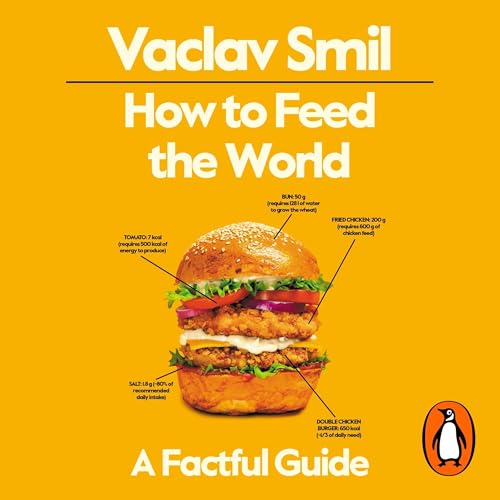 How to Feed the World: A Factful Guide. By Dr. Vaclav Smil, Penguin, 2024.
Dr. Smil concludes that, provided we make some ‘incremental’ adjustments, we should have enough food to feed a growing population even under global warming. It is not necessary to make radical changes and depend on new technologies; in any case, such radical changes and new technologies are unlikely to yield any significant benefits in the coming few decades.
If you are a thirty-year-old reader of this article, you might be worried that food production might decline precipitously with global warming by the time you are fifty. Long- term climate modelling is always fraught with uncertainty, but a study published in Nature Communications indicates that there is no reason for yields to fall with timely adaptation. Adaptation means changing planting dates, practicing double and triple cropping and cultivating varieties that are more suitable for a changed climate. Another paper published in Nature Geoscience suggests that food production can be increased and water use reduced by optimising where crops are grown globally, even with climate change. The problem is that one can never be sure, and shifting crop-growing areas in an era of global distrust is nearly impossible Another paper published in Nature Communications projects significant declines in crop yields in areas where they are currently grown.
Incremental changes should be sufficient
If food production does not fall significantly, incremental changes in the way we consume and produce food should be sufficient for the next few decades at least. (If global warming continues unabated food production would probably decline in the second half of this century but by then we would also have passed the point of peak global population). The most important change required is to reduce food waste. The supply of food in most Western nations is about 3000 kilocalories per day, whereas people generally require about 2000-2200 kilocalories per day. Dr. Smil characterises this excess supply as a ‘waste’. Better packaging and better storage would reduce this waste. Supermarket chains should invest in better demand forecasting so that they do not overstock. Restaurants should give diners reminder cards to be more conscientious in their consumption. Dr. Smil also argues that food portions in North America should be reduced and that supermarket chains should restrict consumer choice. He points out that in just over two decades grocery chains have added four thousand more items on their shelves. He goes on to hint that this enormous increase in consumer choice confuses consumers and reduces sales of supermarket chains. Supermarket chains should, therefore, have a significant incentive to reduce food waste but demography and market forces should also lead to a reduction in waste. Rich societies are ageing and since older people need fewer calories, supply should adjust to demand. Also with rising food prices, people would become more conscious of finishing what they have on their plates. Food prices had been declining across the European Union and the US from the 1930s until the recent spurt in inflation. The Economist suggests that governments would probably want to ‘inflate away’ debt in the coming years.
On the consumption side the other important step is to for people in the rich countries to reduce average meat intake and switch to more environmentally friendly varieties of meat. There are reasons to be optimistic: meat consumption has declined both in Denmark and Germany, and the moment of ‘peak beef’ has already passed in 1977 after which per capita consumption fell by 37 per cent. In China, where calorie intake has increased substantially, per capita meat consumption is half that of Western levels.
On the production side, we need to grow food in more environmentally ways. Regenerative techniques, such as using cover crops and recycling of organic wastes, increase the soil’s organic content and water holding capacity. Precision technologies that monitor soil conditions and guide machines to apply fertiliser, pesticides and water in precise quantities would also reduce environmental impact. Resilient varieties of major crops such as rice and wheat that tolerate flooding and droughts would also keep production on an even keel.
Radical changes that involve wholesale shifts in consumption (towards vegetarianism) or in production (towards organic farming) are not required. This is good news. Abrupt shifts are risky as we know from Sri Lanka’s experiment with organic farming. Dr. Smil cites several research papers to argue that organic farming leads to lower yields. See for example this paper published in the Archives of Agronomy and Soil Science.
No need to depend on new technologies either
Making incremental changes would reduce the need to depend on new technologies. In any case, in Dr. Smil’s assessment, new technologies are unlikely to yield significant breakthroughs over the next two decades. Cultivated meat technologies – making meat in the same way as pharmaceuticals are produced – cannot be depended upon to produce sufficient food at affordable prices, any time soon. The production of cultured meat is energy intensive and this means prices are likely to remain high. It also means that cultivated meat production may lead to higher emissions. With time and economies of scale costs would go down and the electricity would come from renewable sources, but replacing even a reasonable amount of meat with this new technology would require a Herculean effort, The current size of the global antibiotic industry is 150,000 tons; the meat industry is 30 million tons – 200 times larger.
The second type of new technology that would help is replacing annuals with perennials (crops that grow year after year). This would preserve soil fertility and reduce inputs of chemicals and water. At this point, however, the only widely cultivated perennial crop is sugarcane. Perennial varieties of major cereals are in early stages of adoption. A perennial variety of rice was introduced in China in 2018. The average yield is almost identical to annually replanted rice, based on evidence of eight harvests over four years. However, at this point, this perennial variety is grown only on a minuscule fraction of the cultivated area: by 2021 plantings covered 15,333 hectares (about 0.05 per cent of the country’s rice growing area). The Land Institute in Kansas is working on a perennial variety of wheat which is currently being evaluated by researchers across the world.
The other new technology that could lead to a step change in productivity is gene editing of seeds to help cereals fix nitrogen in the soil (essentially making cereals behave like legumes) or to increase the efficiency of photosynthesis (current photosynthetic efficiency is only 4.6 per cent). These technologies are at very early stages of research, and it would take decades to even determine if progress is possible. Dr. Smil observes that this is only to be expected: ‘improving on fundamental limits imposed by million years of plant evolution is an extraordinarily difficult task’.
The book offers an optimistic view though as a reader, you will be left wondering why so much food is wasted and how this food waste could be reduced. Though the overall message is optimistic, the continent of Africa is lagging far behind Asia and must urgently increase food production. Actual yields are an abysmal 20 per cent of their potential and this needs to be narrowed, at least to a certain extent. Closing this yield gap will not be easy. If the rest of the world must reduce chemical use, African farmers must use more fertilisers and pesticides. The laterite (aluminium and iron rich) soil prevents the penetration of roots and water. Seed quality is poor. Climate change is making rainfall even more variable. African leaders will have to step up to this challenge. The world needs to step in to help.
About Vaclav Smil:
Vaclav Smil is a Czech-Canadian scientist and policy analyst. He was educated at Charles University in Prague and later at Pennsylvania State University, where he earned his Ph.D. in geography. He is Distinguished Professor Emeritus in the Faculty of Environment at the University of Manitoba in Winnipeg, Manitoba, Canada. His interdisciplinary research interests encompass energy, environmental, food, population and policy studies. Smil has consistently argued that transitions to renewable energy will be gradual rather than rapid, emphasizing the persistence of coal, oil, and natural gas and highlighting the difficulties of decarbonizing critical industries such as steel, cement, ammonia, and plastics.