
(WeeklyWord extra: the second in a series of four on Ukraine’s hijacked history)
By any measure, the Holodomor stands among the most horrifying atrocities of the 20th century. From 1932 to 1933, a man-made famine orchestrated by Stalin’s Soviet regime killed an estimated 3.5 to 5 million Ukrainians.
It was not the result of drought or economic mismanagement—it was a weapon. The word itself, Holodomor, combines the Ukrainian words holod (hunger) and moryty (to kill), a grimly accurate term for what unfolded across the fertile plains of Ukraine: mass starvation engineered to crush a nation’s spirit.
Collectivization and Resistance
In the late 1920s, Stalin launched a campaign of forced collectivization, aiming to consolidate private farms into state-run collectives across the Soviet Union. Ukraine, known as the “breadbasket of Europe,” was central to this plan. But it was also problematic. Ukrainian peasants fiercely resisted handing over their land, livestock, and livelihoods. Their resistance was not merely economic—it was cultural and national. Having briefly experienced independence after 1917, many Ukrainians clung to their language, traditions, and local autonomy.
Stalin saw this defiance not just as disobedience, but as treason. Determined to eliminate Ukrainian nationalism and any threat of separatism, he resolved to break the will of the Ukrainian people—not with guns, but with hunger.
The Weaponization of Hunger
The Holodomor was the result of a calculated series of policies:
- Grain requisition quotas were set impossibly high. When villages couldn’t meet them, punitive measures followed.
- Blacklisted communities were cut off from all supplies—no food, no trade, no help. They became islands of starvation.
- Internal passports were introduced, forbidding peasants from fleeing the famine zones. Those who tried were arrested or turned back at borders.
- Food confiscation brigades swept through the countryside, seizing not just grain but potatoes, vegetables, even seeds meant for future planting.
Children died beside empty barns. Families resorted to eating grass, bark, and eventually, unthinkably, each other. Reports of cannibalism emerged as entire villages collapsed into silence and death.
This was not mismanagement. It was genocide.
Lies, Censorship, and Silence
What makes the Holodomor particularly chilling is not just the scale of suffering, but the elaborate Soviet campaign to hide it. Censorship was absolute. Words like “famine” were banned from newspapers. Speaking about the crisis could lead to imprisonment or execution.
Meanwhile, Soviet officials boasted about record harvests and exported grain to the West. Foreign correspondents like Walter Duranty* of The New York Times repeated the official line, downplaying reports of famine and praising Stalin’s progress. Duranty even won a Pulitzer Prize—a fact still bitterly debated today.
Western governments, eager to engage diplomatically with the USSR, largely looked the other way. They knew—but did not act.
The Diaspora Keeps the Truth Alive
While the USSR buried the truth, Ukrainian communities abroad kept it alive. Survivors who emigrated to Canada, the United States, and Europe began to speak out. In the 1950s and 60s, testimonies were collected, stories written, and seeds of historical memory planted.
In 1983, the 50th anniversary of the famine was marked with protests and memorial events across the West. British historian Robert Conquest’s Harvest of Sorrow became a landmark work, documenting the famine’s political roots. Still, the Soviet Union denied everything.
Only in 1991, with Ukraine’s independence, could the truth be officially acknowledged. Ukraine declared the Holodomor a genocide—and began building a national memory long suppressed.
Recognition and Denial Today
Today, more than 30 countries recognize the Holodomor as genocide, including Canada, Australia, and much of Eastern Europe. But Russia continues to deny it. The official line from Moscow is that “all Soviet peoples suffered” during collectivization, framing the famine as a tragic but unintentional consequence of modernization.
Putin’s regime, deeply invested in restoring a neo-Soviet narrative, actively downplays the Holodomor. Through disinformation, revisionist history, and the glorification of Stalin, the Kremlin seeks to blur historical truth once again—just as it wages a brutal war against Ukraine today.
Why the Holodomor Still Matters
The Holodomor is not just a historical episode—it is a living wound. It demonstrates how starvation can be wielded as a political weapon. It reveals the terrifying efficiency of authoritarian control when memory, truth, and identity are suppressed. And it underscores why Ukraine’s struggle for sovereignty and freedom today is so deeply rooted in the trauma of its past.
To remember the Holodomor is not simply to honor the dead—it is to resist the erasure of history. It is to confront lies with truth, to challenge imperial domination with historical clarity, and to assert that no nation’s suffering should be buried beneath propaganda.
In our own time, as disinformation spreads and authoritarianism resurges, remembering the Holodomor is an act of conscience. It reminds us what is at stake when truth is denied, and why justice and memory must walk hand in hand.
To forget is to risk repeating.
To remember is to resist.
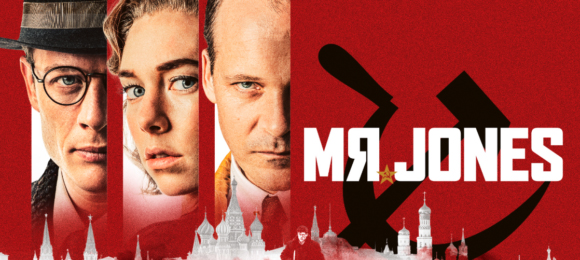
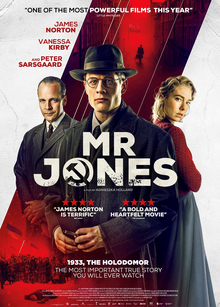 The film “Mr. Jones” directed by Agnieszka Holland tells the story of Welsh journalist Gareth Jones, who uncovered the Holodomor, a man-made famine in Ukraine during the 1930s. The film depicts Jones’s journey to the Soviet Union, where he witnesses the devastating consequences of Soviet policies and attempts to bring the truth to the world despite efforts to suppress the information.